Nobody in Kings Mountain chooses a transmission path in the abstract. They choose it standing in a service bay, looking at a vehicle that will not move properly, with a symptom that got them there: the truck that started slipping on the way to work, the SUV with no reverse in the driveway, the car that went into limp mode on the highway. The choice between rebuilding your transmission, installing a remanufactured unit, or fitting a used one should start from that symptom, because what failed, and how much damage it did on the way out, decides which door makes sense.
This walk-through follows the troubleshooting order a careful shop uses, from symptom to cause to the point where the three options separate. Follow the steps and you will know which questions to ask before you authorize anything.
Steps one and two: confirm it is internal, and find the cause
- Reproduce the symptom on a road test. Slipping, no reverse, harsh shifts, and limp mode each point at different systems. A symptom that cannot be reproduced gets monitored, not rebuilt.
- Scan for codes and read the live data. Ratio errors confirm internal slipping. Solenoid and pressure codes may identify an electrical or valve body fault that imitates internal failure.
- Inspect the fluid and drop the pan if indicated. A light dusting of clutch material is wear. Chunks, heavy metal, and burnt fluid throughout mean the failure has been distributing debris, which changes the rebuild math.
- Rule out the external killers. Low fluid from a leak, a restricted cooler, a failing sensor, or a wiring fault can destroy a good unit or mimic a dead one. Whatever killed this transmission must be named before its replacement is chosen.
- Assess the case and hard parts. If inspection shows a cracked case, a destroyed gearset, or a scored pump, price the rebuild honestly against a remanufactured unit, because hard parts close the gap fast.
- Match the option to the vehicle and its future. Years you plan to keep it, its overall condition, and how you use it decide between the durability of remanufactured, the tailored value of a local rebuild, and the short bridge of a used unit.
- Verify after installation. Any of the three paths ends the same way: correct fluid, any required programming or relearn procedure, cooler service, and a road test that confirms the original symptom is gone.
When the symptom points to a rebuild
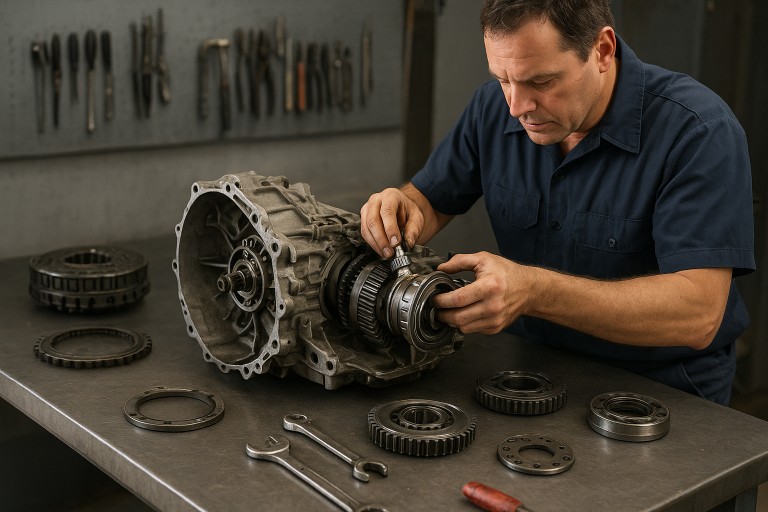
A rebuild fits when the failure is wear, caught before it became destruction: clutch packs worn, seals hardened, shifts deteriorating over months. Your case is sound, your hard parts measure within specification, and the unit's problems are the renewable kind. A bench rebuild replaces what is worn, renews the converter, and returns your own transmission with its history known. It also fits when your vehicle is older or uncommon enough that remanufactured units are scarce, because a good rebuilder can renew a unit the factories no longer support.
When the symptom points to remanufactured
Remanufactured fits when the damage is broad or the timeline is tight. A unit that shed metal through every circuit needs more than wear items; a factory remanufactured replacement arrives built to a fixed specification, often with updates that correct the model's known weaknesses, and the swap is predictable work. It also fits vehicles you depend on completely, because the warranty coverage on remanufactured units is typically the broadest of the three paths, and downtime is usually the shortest reliable option.
The core exchange is part of the deal. Your old unit returns to the remanufacturer, and a core charge applies until it does, in rebuildable condition.
When a used unit is the honest answer
A used transmission is a gamble with known odds, and sometimes the odds are acceptable. The vehicle is near the end of its economic life, the goal is another year rather than another decade, and the labor risk is understood: if the used unit fails, the installation labor is spent again. What a used unit should never be is a surprise. Ask its mileage, its source vehicle, and what start-up guarantee stands behind it, and have the cooler and lines cleaned regardless, because debris from your old failure is waiting to greet whichever unit goes in.
The cause question outranks the choice question
Every path fails the same way if the root cause rides along. A restricted transmission cooler starves any replacement of cooling. A chafed harness that shorted a solenoid will short the next one. A shop like Curry's Trans-Research-Development treats finding the cause as part of the job whichever door you pick, and it is reasonable to ask, before authorizing, what exactly will be checked beyond the transmission itself. If the answer is nothing, the quote is incomplete no matter which door it prices.
Common questions
How long does each option usually take?
A used or remanufactured swap is generally the fastest, often a few days including shipping. A bench rebuild takes longer because inspection happens before parts are ordered, and surprise hard parts can extend it.
Does a remanufactured unit come with a torque converter?
Typically yes, a renewed converter is part of the unit. Confirm it when comparing quotes, since a separate converter line item changes the comparison between a remanufactured quote and a rebuild quote.
Can a rebuild be done with performance or towing upgrades?
Yes, and a bench rebuild is the natural time for them, since the unit is already apart. Updated clutch materials, shift calibration parts, and cooling additions are common requests for trucks that tow.
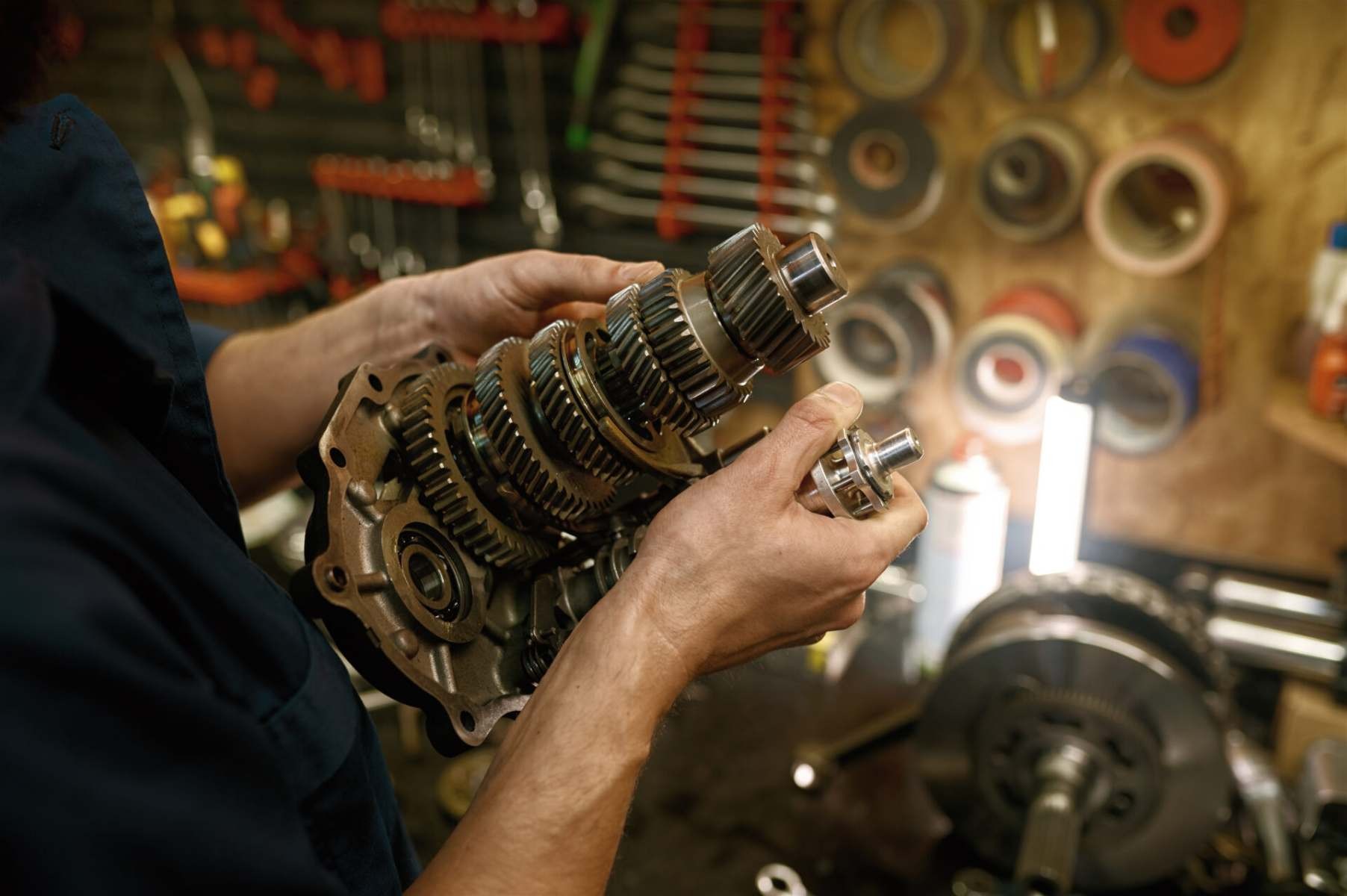
Photos in this guide are representative stock images.
← All guides from Curry's Trans-Research-Development← Back to Curry's Trans-Research-Development