The transfer case is the second gearbox in a four-wheel-drive truck, and around Kings Mountain it does real work: gravel drives, muddy job sites after summer storms, boat ramps, and the occasional ice morning. It is also the most commonly skipped service in the whole drivetrain. Owners change engine oil by habit and transmission fluid eventually, while the transfer case runs on its factory fill for a decade because nothing reminds them it exists.
The options for transfer case designs are genuinely different, and so is the care each one needs. This comparison lays the main types side by side, then covers the service rules that apply to all of them.
The types, side by side
| Feature | Part-time (2WD / 4-Hi / 4-Lo) | Automatic / full-time 4WD | Single-speed AWD case |
|---|---|---|---|
| How it drives | Rear-wheel drive until you select 4WD, which locks front and rear together | Always engaged to some degree; a clutch or coupling inside apportions power as traction changes | Always engaged, no low range, minimal driver input |
| Low range | Yes, a deep reduction for crawling and steep work | Often yes on trucks, less common on SUVs | No |
| Dry pavement use in 4WD | Not for locked modes; the driveline binds and winds up | Designed for it | Designed for it |
| Main wear item | Drive chain and shift mechanism from occasional hard use | Internal clutch pack or coupling, working every mile | Chain and bearings, with fluid condition deciding life |
| Tire matching sensitivity | Low in 2WD, high when locked | High at all times; mismatched tires wear the coupling constantly | High; the case absorbs size differences continuously |
| Fluid | ATF, gear oil, or specific case fluid depending on model | Often a specific fluid for the clutch system | Usually a specific fluid, small capacity |
| Typical neglect symptom | Stuck shift motor, clunk from a stretched chain under load | Binding and shudder in turns, worn coupling | Whine or growl that follows road speed |
What the comparison means for your truck
If your truck has a part-time case, your main jobs are exercising the shift system and respecting the pavement rule. Run through the modes a few times a year on gravel or dirt so the electric shift motor and linkage do not seize from disuse, a common failure discovered exactly when a driver needs low range. If your system is automatic or full-time, your main job is tire discipline and fluid, because the coupling inside works every single mile, including every mile on mismatched tires.
AWD crossovers with single-speed cases ask the least of drivers and get serviced the least, which is backwards. Their cases hold a small amount of fluid that takes constant duty, and the first sign of trouble is usually a speed-related whine that owners mistake for a wheel bearing. The bearing check and the case check are one diagnosis apart, and fluid condition often settles it.
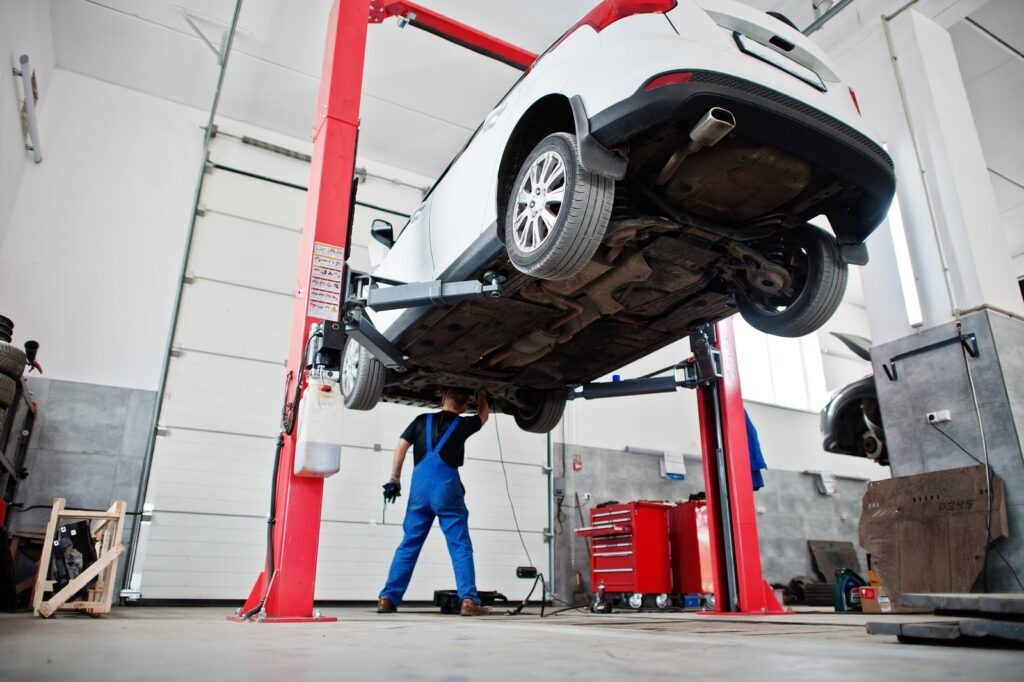
Fluid: small case, short leash
Every type shares one trait: modest fluid capacity. A leak or contamination that a large transmission absorbs will drop a transfer case toward trouble quickly. Service intervals in owner's manuals commonly land in the tens of thousands of miles, with a shorter severe-service interval for towing, off-pavement use, and frequent 4WD work. The service itself is a drain and fill with the correct fluid, and the correct fluid part is not a detail. Cases that share a driveway can take three different fluids, and the wrong one can cause shift complaints in clutch-type cases within a few thousand miles.
While the fluid drains, a technician reads it the way engine builders read oil. Metal glitter means chain or bearing wear. Dark and burnt means heat, which in a case this size usually means it has been run low. Clean and merely old means the schedule worked.
Failure sounds, translated
A ratcheting clunk under load in 4WD is the classic stretched chain skipping on its sprockets. A growl that rises with road speed and ignores engine speed points to bearings. A truck that binds and hops in tight turns in an automatic mode, on dry pavement, is telling you the coupling is applied when it should be open, or that the tires are fighting it. A flashing mode light with no engagement is usually electrical, the shift motor or its sensor, and is the best news on this list because the case itself is probably healthy.
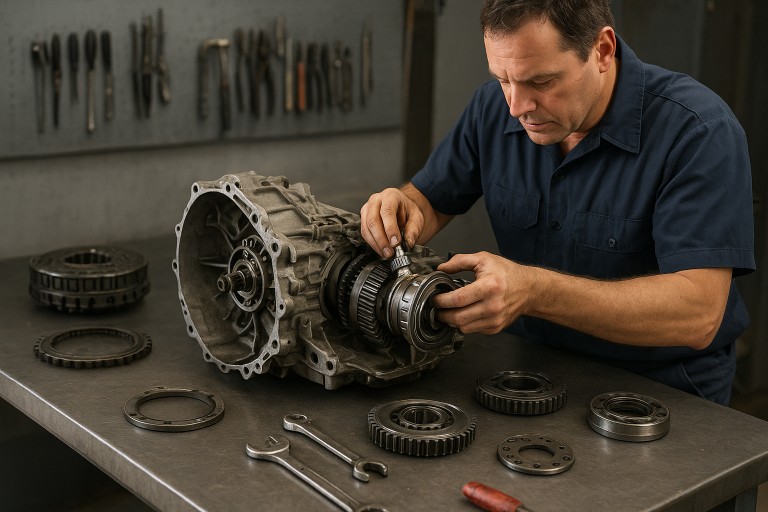
At Curry's Trans-Research-Development, transfer case diagnosis starts with those distinctions and a fluid sample, not with a quote for a case. Half the transfer case complaints that arrive at a transmission shop turn out to be tires, shift motors, or fluid, in roughly that order of relief.
Common questions
Does the transfer case share fluid with the transmission?
On most trucks, no. They are separate units with separate fills, which is exactly why the case gets forgotten. A few designs share, and the owner's manual is the authority for your vehicle.
Can mismatched tires really damage the transfer case?
Yes, on automatic and AWD systems. Different circumferences force the axles to turn at different speeds, and the case absorbs that fight continuously until its clutch or coupling wears out.
Is a whine from underneath always the transfer case?
No. Wheel bearings and differentials whine too, and all three follow road speed. A lift inspection with the drivetrain turning, plus a fluid check, separates them reliably.
Photos in this guide are representative stock images.
← All guides from Curry's Trans-Research-Development← Back to Curry's Trans-Research-Development